“What’s vibe coding actually like? What can you build?”
With almost no web background, I shipped three small services with vibe coding alone. Here’s what I built and what I learned — hopefully useful if you’re curious about vibe coding or dipping a toe into programming.
What you’ll learn
- What you can ship with vibe coding (three concrete examples)
- What I did myself to improve output quality
- Tech I picked up per project (Stripe, Canvas, etc.)
Background
I work as a technical artist in games — mostly helping design, bridging to engineering, that kind of role.
More detail:


Roughly: generalist across the pipeline, scripting when needed.
Getting better at vibe coding means updating your own knowledge
I had little web experience, so I learned while building — official docs, blogs, AI answers, try, repeat.
What stuck: you still need to level up no matter the tool.
When you want a “one-shot” result, even a little vocabulary and flow up front helps prompts land better.
My loop:
- Learn more (AI + search, go deeper)
- Talk to the AI and refine prompts
- Ship and iterate
Project 1: Japan stock screener (yfinance)
I reread Investment Strategy after a year and wanted to hunt for undervalued Japanese names. I also didn’t see many articles doing broad yfinance screening, so I tried it.
- Write-up: note (Japanese)
What I learned
Metrics and formulas
Working with yfinance forced me to revisit PER, ROE, dividend yield, and how they’re calculated — plus English docs, so programming + investing vocabulary in one go.
Amazon Associates in practice
I linked Investment Strategy from Zenn and the project and saw about ¥2,962 in commissions.
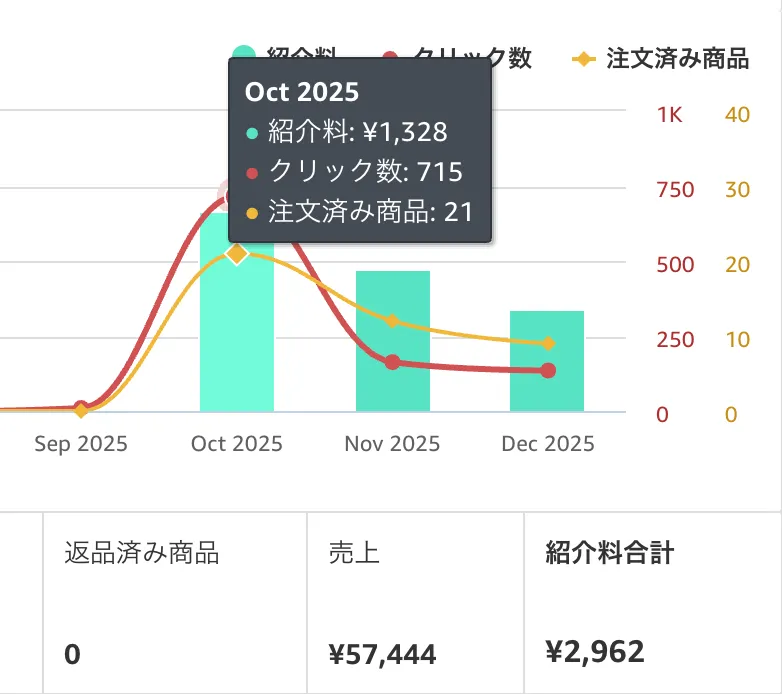
I only want to recommend things I genuinely like — affiliate isn’t for everyone.
At the same time, one article spiked to ~8,000 views in a day and still gets 10–20 visits/day, so I got a feel for scale vs. revenue.
- Related: Zenn — Python yfinance
(If Zenn + affiliate felt off to you — sorry about that.)
Project 2: Currency board image generator
When I dabbled in YouTube, I laid out country price boards in Illustrator for each video.
“Combine multiple APIs, shape data, export an image” felt like something models still struggle with, so I built a Wise-API tool for myself.


What I learned
SPA → SSR
For SEO I moved toward SSR. Hydration / server–client mismatches took time, but I got the idea of SEO without breaking the UI.
“SEO” today
From “what is SEO?” to crawler-friendly markup and structures LLMs can parse — “modern SEO” in one package.
Stripe
I wired Stripe for a possible paid tier. Sandbox made it easier than expected. I didn’t finish every policy detail, so I stayed free for now. The Stripe website feels sluggish — would love that improved (lol).
Project 3: Gradient Thumbnail Maker
Why
For note thumbnails I used Photo Gradient for the gradient, then Photoshop for text — two steps.
I wanted gradient + typography in one web tool for myself.
What I learned
Abstract prompts hit a wall
On the design side, vague instructions only go so far. I iterated with lots of references and mocks, then fed tighter prompts.
It’s basically a personal tool, but it’s public for anyone making note / blog hero or OGP images.
Closing
Vibe coding lowered the bar to ship.
Ideas and originality matter more than ever.
My sweet spot: fast mocks with vibe coding, then spend real time on security and UX for anything serious.
I’ll keep building silly-but-fun stuff alongside game work.
Have a good one.